
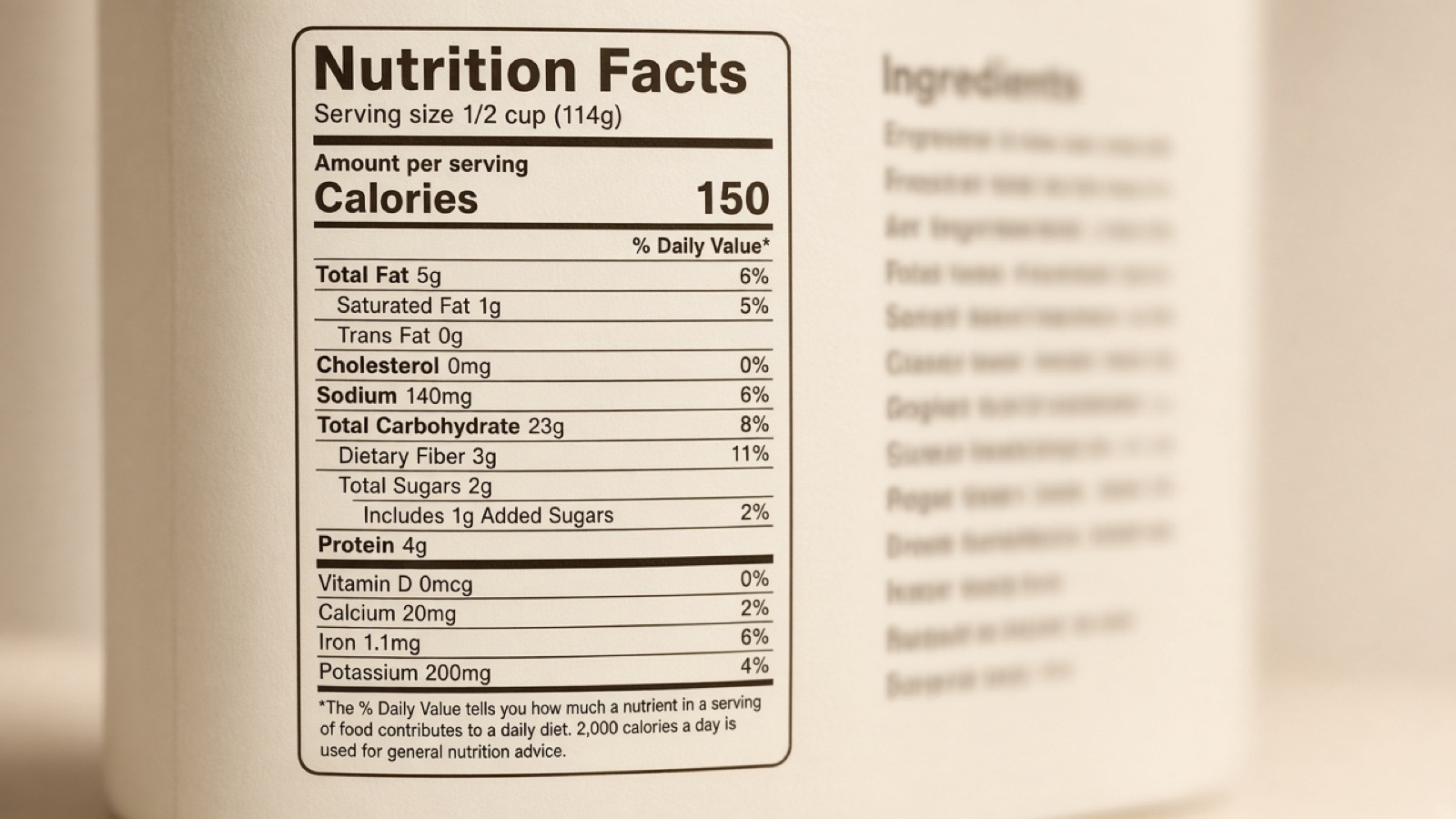
Healthy-living apps often collapse “food quality” into one grade. Real labels give you two panels for a reason. Nutrition Facts answer how much. The ingredient list answers what’s in it. Households that know which question they’re asking shop faster — and get fooled by front-of-pack claims less often.
Use Nutrition Facts when…
- You’re comparing two similar staples (yogurts, cereals, breads) on sugar, sodium, or fiber.
- Serving size tricks matter — especially multi-serve packages people finish in one sitting.
- A clinician or diet pattern set a numeric target.
Use the ingredient list when…
- You’re watching additives, oils, dyes, or a long processing trail.
- Someone has a preference or allergy watch (still: package allergen block wins).
- Front claims say “simple” or “natural” and you want the receipt.
A 20-second food loop
- Check serving size sanity.
- Glance sugar / sodium / fiber if that’s your household goal.
- Read the first five ingredients + scan for your watch list.
- Save keepers so you don’t re-debate every week.
IngreView bias: we explain labels across the cart. We don’t sell a detox grade as medical truth. Ultra-processed is a useful conversation — not a scarlet letter.
Continue with how to read a household label and the ingredient checker guide.
Educational context only — not medical, dietary, or allergy advice. Always verify allergens and safety-critical information on the product package and with qualified professionals when needed.